

P2026090726
Bluetooth 5.0 Mono Audio Receiver Module
DZD 500.00
7 results
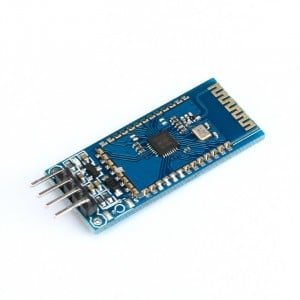
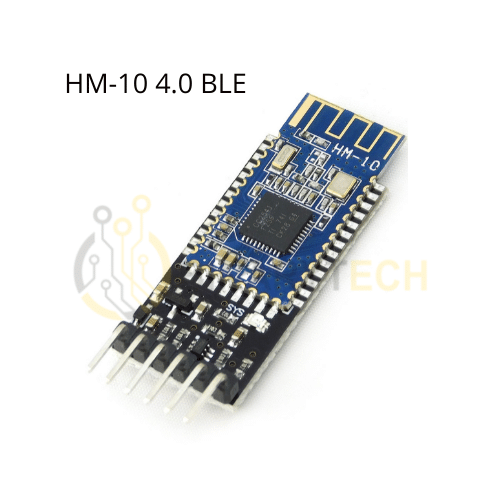
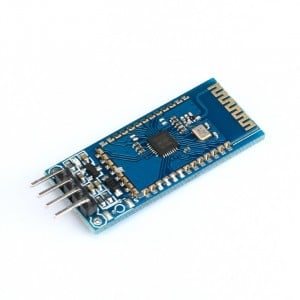
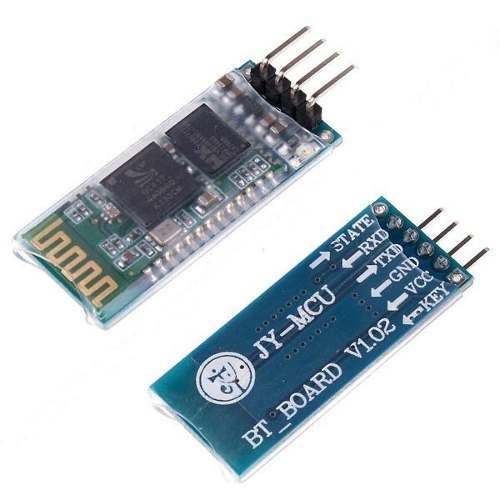
Bluetooth modules for your projects: wireless serial link type HC-05, HC-06 or JDY-30, BLE with the HM-10, and Bluetooth audio receivers to feed an amplifier or a speaker.
P2026090726

P2026070270
2S5L223241
9R1W943309
68MU912398
8XN1N12397
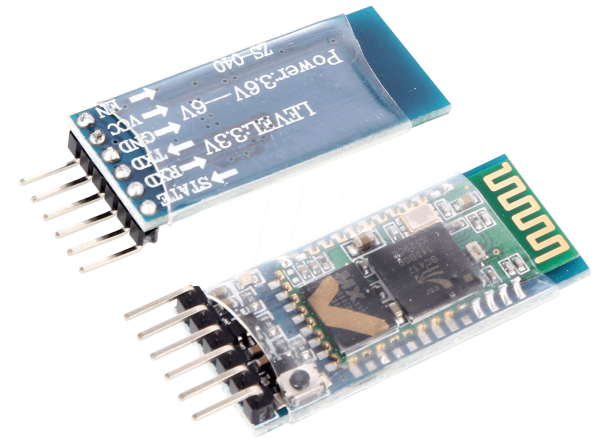
The first question to ask is whether you want to transmit data or sound. To control a robot, read sensors or send commands from a phone, you need a serial (UART) module: it connects to the TX/RX of the microcontroller and behaves like a wireless serial cable. To listen to music on an amp or a speaker, you need an audio receiver, such as the mono Bluetooth 5.0 audio module or the 4.1 Type C model, whose output goes directly to the amp's input.
On the wiring side, these modules work in 3.3 V logic: the RX pin must not receive 5 V directly from an Arduino, a simple voltage divider or level adapter is enough. Also check the supply voltage of the small breakout board before connecting it. Other wireless solutions (Wi-Fi, 433 MHz, nRF24) can be found in the Radio frequency category.
The HC-05 can work as either master or slave, so it can connect itself to another module. The HC-06 is slave only: it waits for a phone or PC to connect to it. For a project controlled by an Android app, either one works.
The HC-05, HC-06 and JDY-30 use classic Bluetooth with the serial profile (SPP), which iOS does not expose to apps. For an iPhone-compatible project, you need a BLE module such as the HM-10.
Power is supplied through the VCC pin provided by the breakout board, but the module's RX pin works in 3.3 V logic. Place a voltage divider or level adapter between the Arduino's TX and the module's RX to avoid damaging it.
No, its output is a line-level or low-power signal: it needs to be sent to an amplifier module. The mono 5.0 module is suited for a single channel, and the Type C version charges and powers itself through a USB-C cable.
The Bluetooth version (classic or BLE), whether it comes with a breakout board with a regulator and solder-ready pins, the supported profile (data or audio), and the chip brand. A bare module is always cheaper than one already mounted on a breakout board.