
93V9K45748
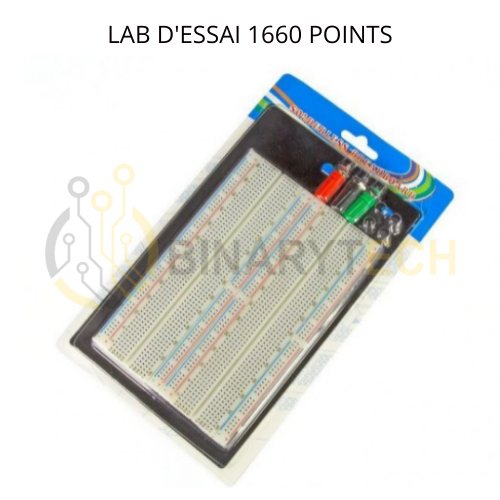
1660 Tie Points Breadboard
DZD 1,750.00
18 results
Solderless breadboards for building and testing a circuit: from the mini SYB-170 to the 830-point MB-102, with power supplies and prototyping holders.
93V9K45748
T2LN445746
ET44712271
9GLK312189
D5POP12970-07
3DFFA29769
D5POP12970-06

ZRQRR25691
D5POP12970-05
OR65526011
D5POP12970-01
D5POP12970-02
D5POP12970-04
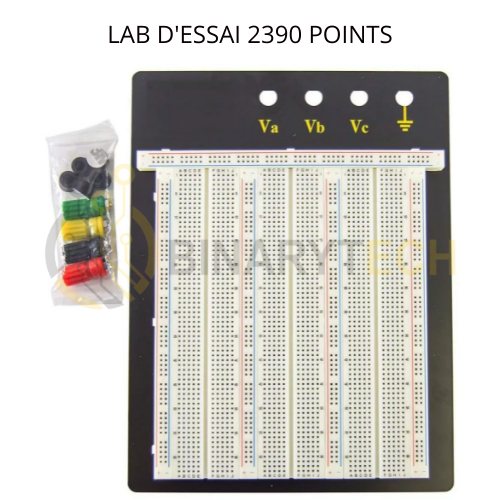
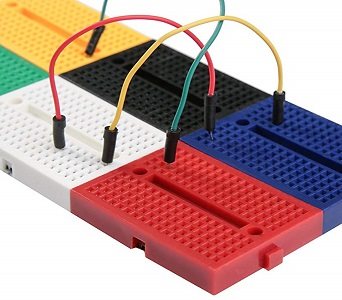
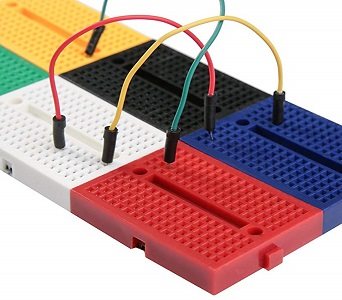
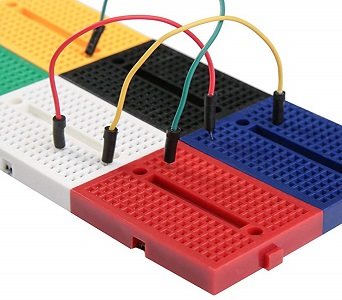
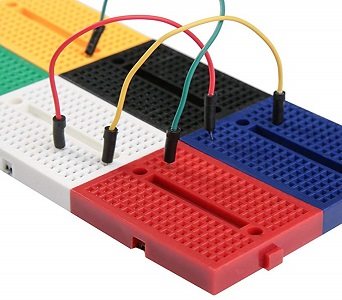
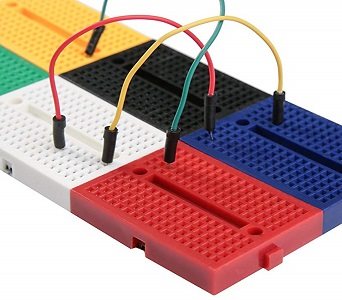
A breadboard lets you wire up a circuit without soldering: components and wires clip into metal contacts, and you can undo everything to start over. The choice comes down first to the number of contact points, in other words how much room you have available.
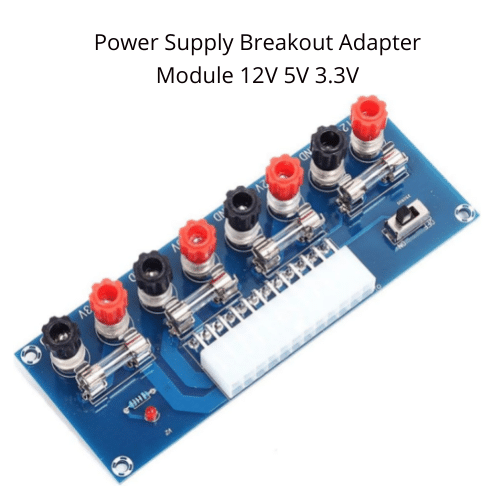
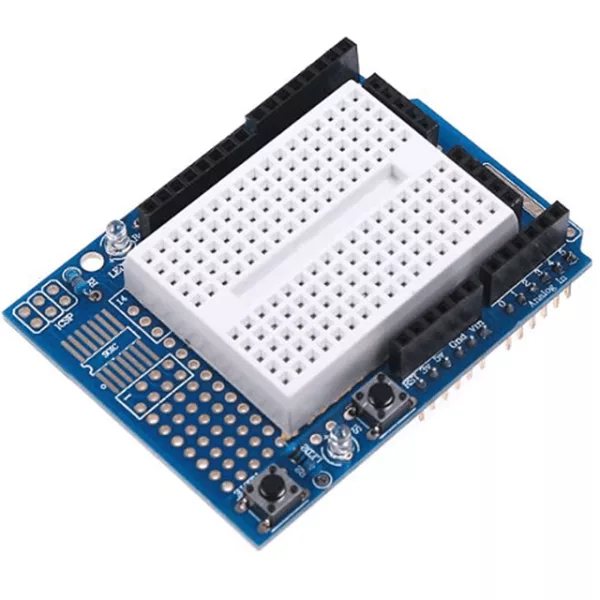
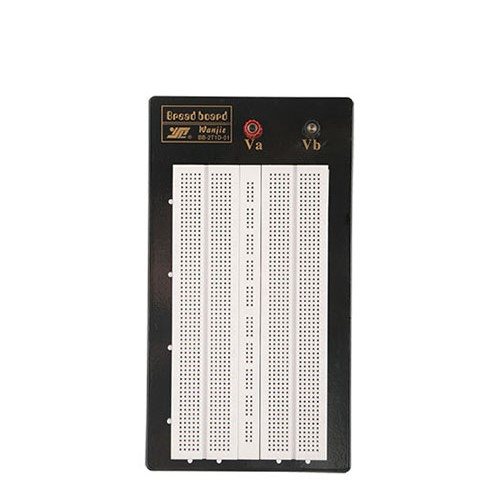
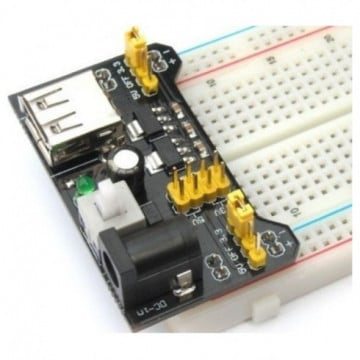
Also check the side power rails (+ and −) and the adhesive backing if you plan to mount the board on a platform. For clean power, a module such as the MB-102 3.3V 5V power supply clips directly onto the rails and avoids drawing 5V straight from the board. The BB-01, BB-2T3D-01, and BB-4T7D holders combine a breadboard and a build area on a single base. For wires and accessories, see the Prototyping category.
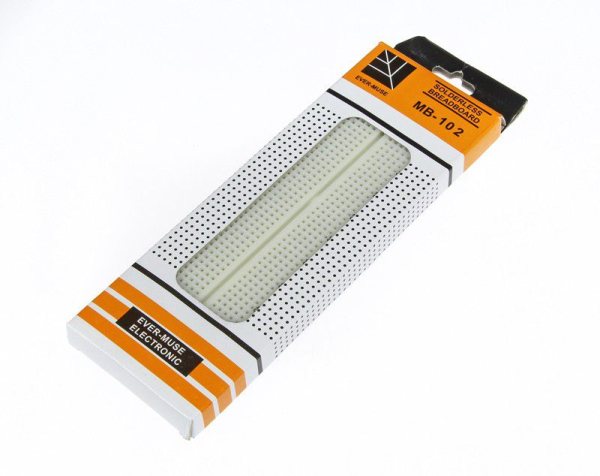
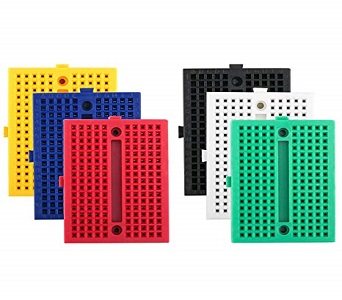
An 830-point MB-102 works well: it leaves room for the board, the modules, and the jumper wires, and its two power rails simplify wiring. A 400-point board is enough for simple builds.
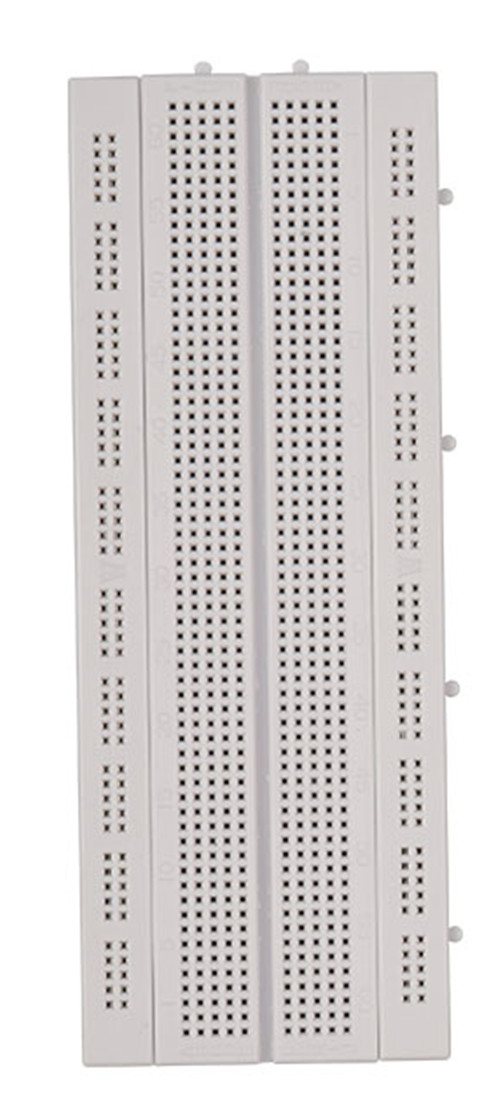
It is just the number of contact holes, in other words the mounting surface. The internal principle stays the same: rows of five linked contacts, separated by a center channel for DIP packages.
It supplies regulated 3.3V and 5V to the rails without overloading the development board's regulator. This is useful as soon as a motor, a display, or several modules draw current at the same time.
The number of points, whether it has a metal base or separate power rails, and the quality of the internal contacts, which determine how well it holds up over time after many connections.
No, a breadboard is meant for temporary connections. To make a build permanent, move to a perfboard or a printed circuit board.