
New
P2026100890
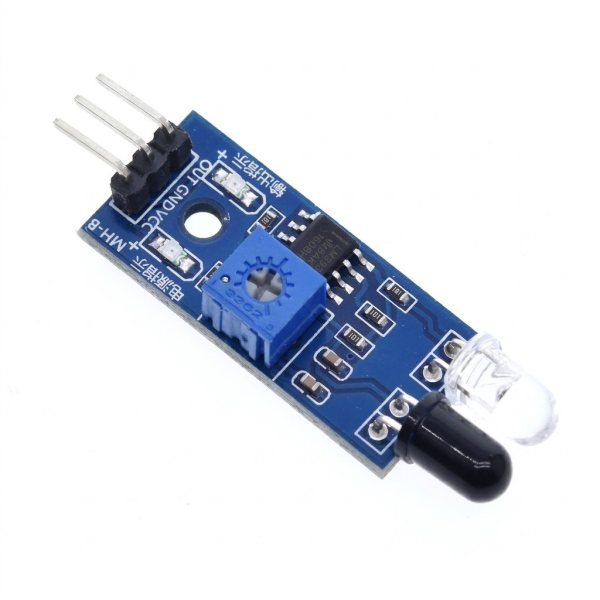
Infrared Proximity Sensor – FC 51
DZD 450.00
15 results
Infrared sensors to detect an obstacle, follow a black line, measure a distance or spot a flame: FC-51, TCRT5000, E18-D80NK modules and IR arrays for robots.
P2026100890
6N7G541962
F2J8L41270
4L6J636707
W4SYT34212
4OG2813404-1
H67UU23187
P181G13362
VSB8B22781
An infrared sensor sends out invisible light and reads what comes back. Depending on how it interprets that return, the use changes completely: on-off detection, line following or distance measurement.
Check the supply voltage and the logic level: a 5 V output wired to a 3.3 V board like the ESP32 requires a voltage divider. For other families of detection, see the Sensors category.
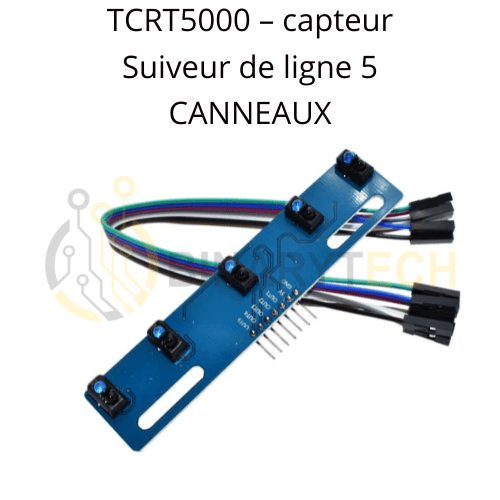
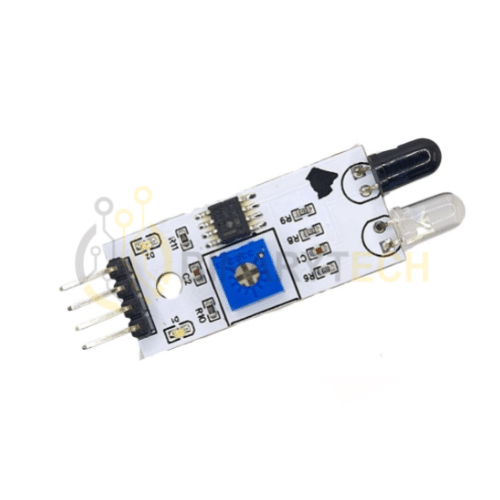
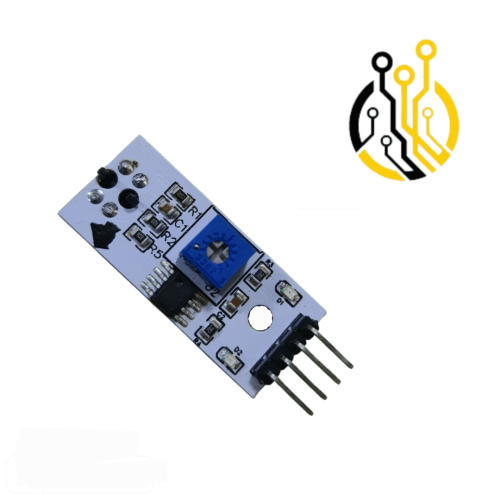
The FC-51 detects an obstacle in front of it, a few centimeters away, and is used to avoid walls. The TCRT5000 works very close to a surface and compares reflectance, which makes it a line follower.
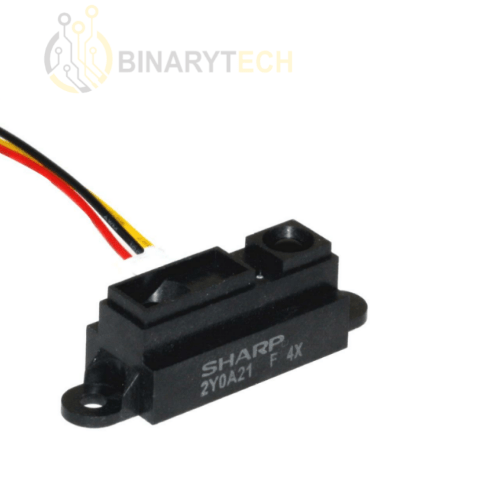
The Sharp 2Y0A21 gives an analog voltage proportional to distance between 10 and 80 cm, which allows an actual measurement. IR modules like the FC-51 only give presence information.
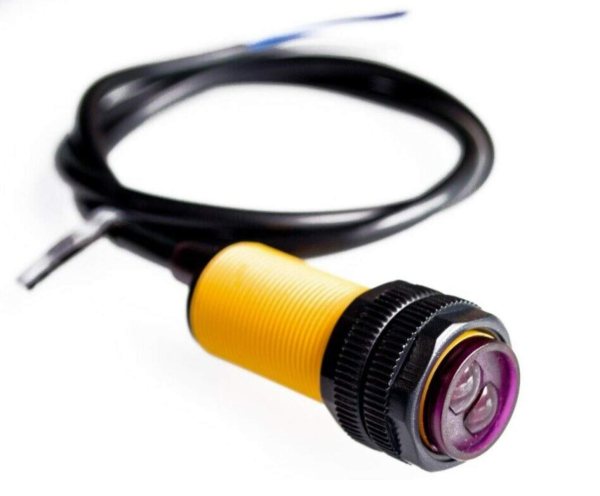
A black or matte surface absorbs infrared radiation and reflects too little light back to the receiver. Move the sensor closer, adjust the potentiometer, or switch to an adjustable-range sensor like the E18-D80NK.
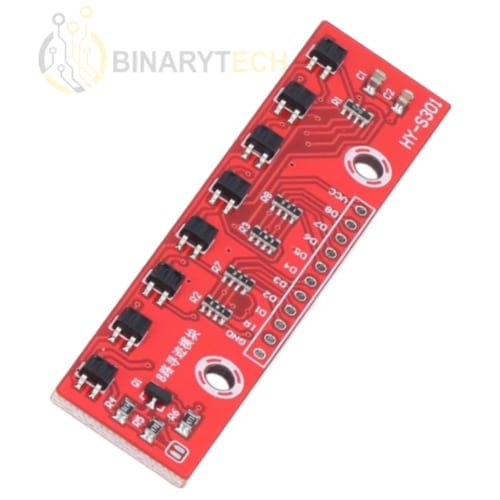
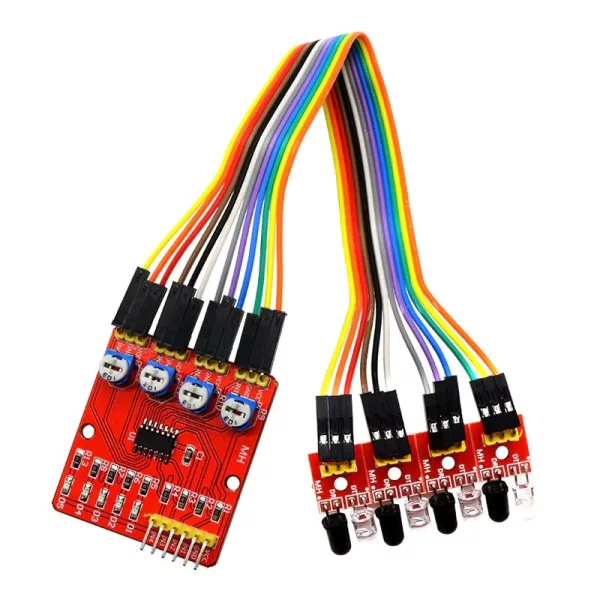
Two or three sensors are enough for a slow robot. For a smooth path and tight turns, a 5-channel array or QTR 8-channel array allows you to calculate the offset from the line and apply a progressive correction.
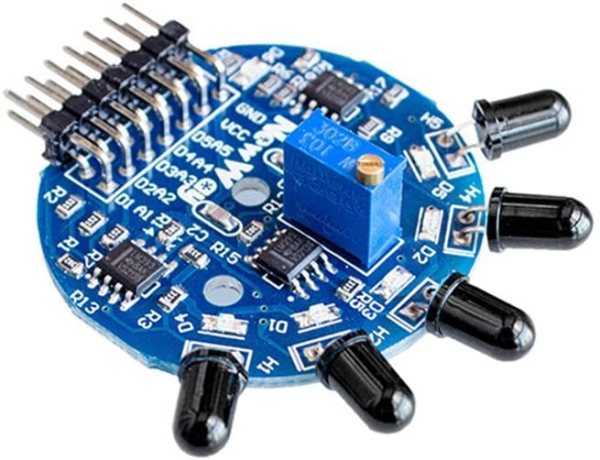
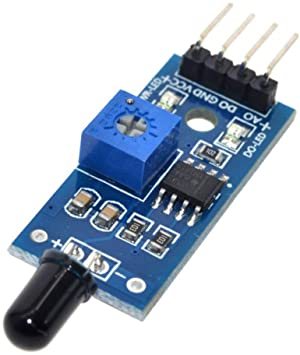
It reacts to the infrared radiation of a flame, within a limited cone and at short range. It is a module for projects and learning, not a certified safety detector.