
New
P2026111059
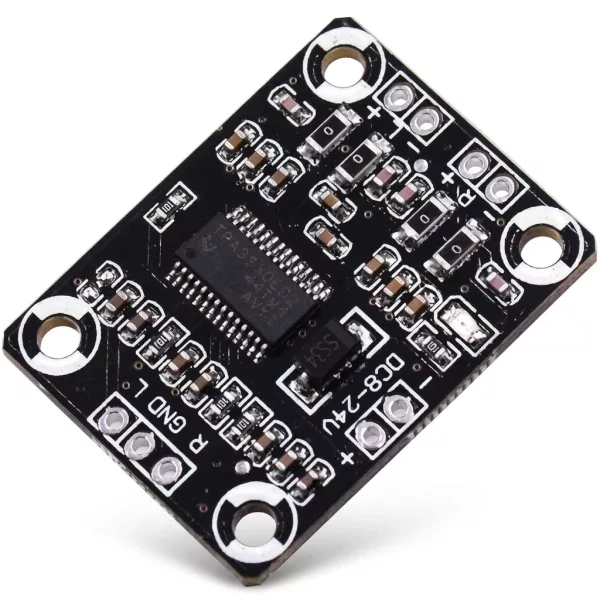
Module d'amplification audio CA-3110 2*15W
DZD 550.00
5 results
Audio amplifier integrated circuits for speakers and loudspeakers: class AB, class B and class D, mono, stereo or 4-channel, in through-hole or surface-mount package.
P2026111059
P2026111058
P2026080601
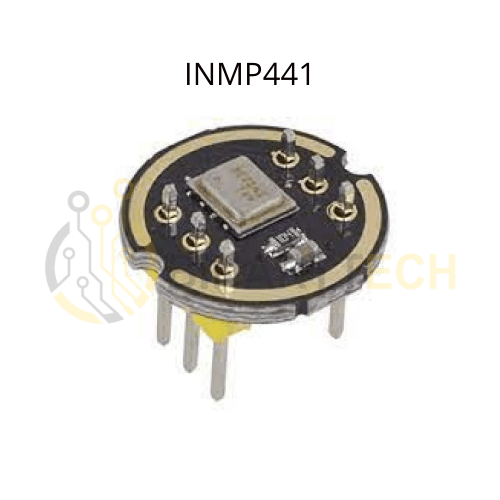
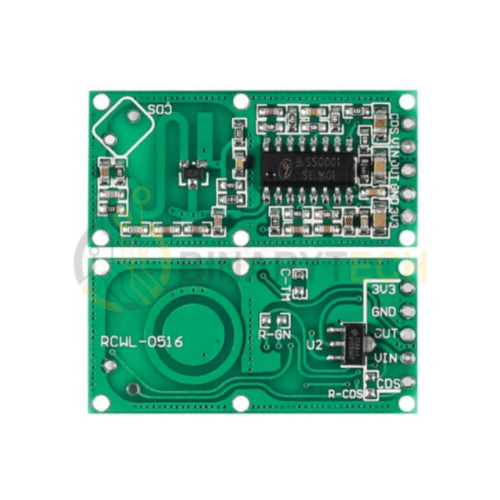
An audio amplifier takes a weak signal (output from a player, a preamp, a microphone such as the INMP441 module) and raises it to the level needed to drive a speaker. Three things determine the choice: the useful power, the number of channels and the available supply voltage.
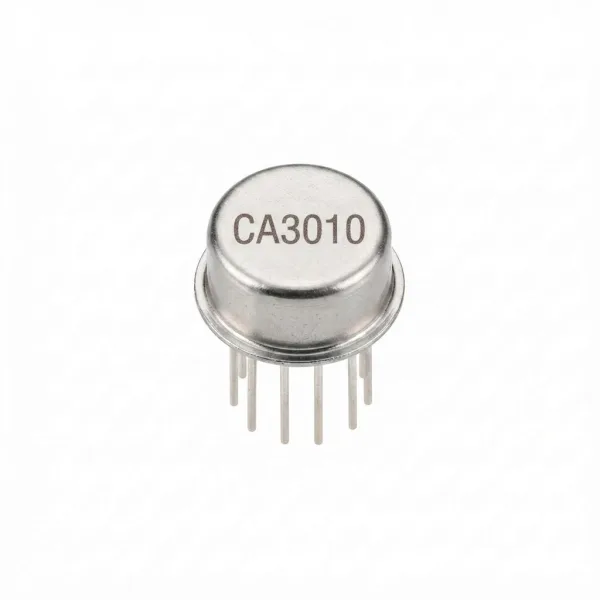
Always check three values together: the supply voltage, the speaker impedance (4 Ω or 8 Ω) and the stated power — a circuit rated 10 W at 4 Ω will not give that at 8 Ω. The CA3010 is an RF amplifier and not an audio one, and the LA78040B is a TV vertical deflection stage: they are listed here as power circuits, not as speaker amplifiers. Other signal modules are found under Autres modules.
Class AB conducts continuously: its circuit is simple and the sound is barely sensitive to filtering, but since a good part of the energy is lost as heat, a heat sink is needed. Class D switches at high frequency, runs much cooler and preserves battery life, at the cost of an output filter and a clean layout.
The TDA2003A works well in mono on a 12 V type supply with a 4 Ω speaker, and the TDA1517 does the same in stereo at lower power. Both need few external components and a properly sized heat sink.
The control signal yes, through a DAC output, a filtered PWM or an I2S DAC, but not the power supply: the power must come from a separate source able to supply the speaker's current, with grounds connected at a single point.
It is not a complete amplifier: it is the control stage of a class D amplifier, driving external power MOSFETs. It is used when wanting to exceed the power of a single-chip IC by choosing the output transistors yourself.
The operating class, output power, number of channels, package type and chip manufacturer make the difference. A through-hole mono class AB circuit and a multi-channel class D stage are not in the same range.