
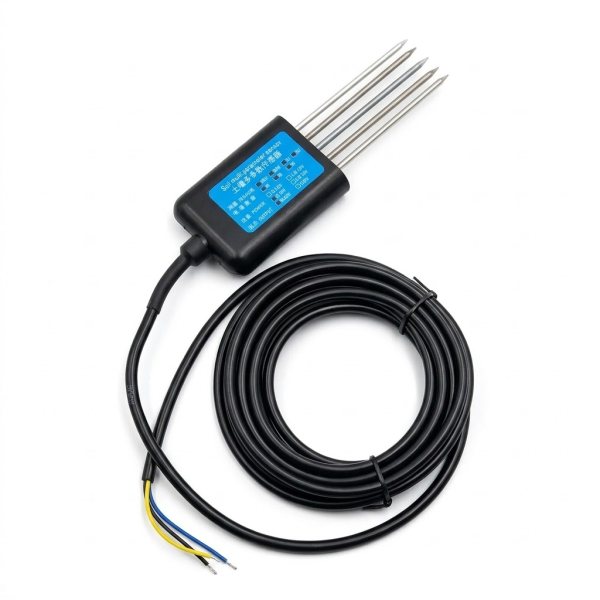
V3QPO45898
7-in-1 Soil Temperature and Humidity Sensor with RS485 Output, EC, NPK, PH for Agricultural Testing
DZD 22,500.00
38 results
Binarytech modules: relay boards, sensors, SMD adapters and communication modules assembled locally, ready to wire to Arduino, ESP32 or a PLC.
V3QPO45898
6BH6P45501
79FV941311
YAYAH41277
H3IED41076

8Z19429671
3QQO634651
DB32434579

6O27F34110-01
6O27F34110-03
6O27F34110-02
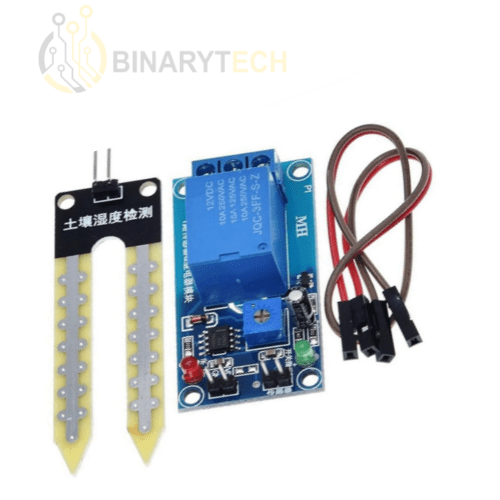
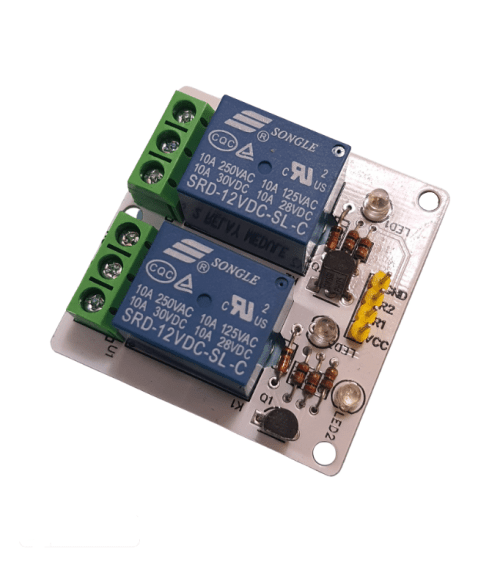
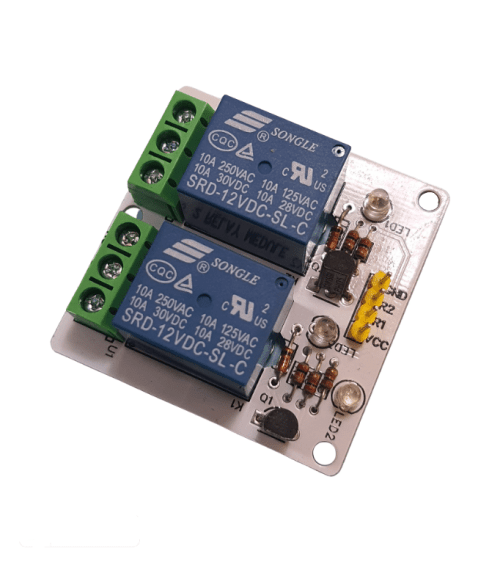
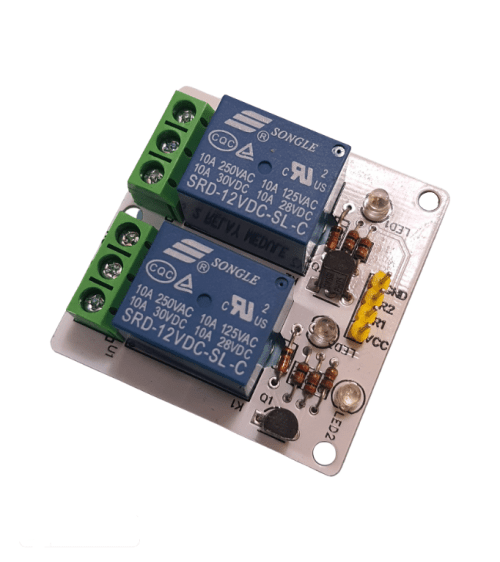
This range covers three families. The relay modules (1, 2 or 4 channels) are used to drive a 220 V load from a microcontroller: the first thing to check is the coil voltage, since a 5VDC module can be driven directly from an Arduino output, while a 12VDC or 24VDC module needs a separate power supply. The High/Low level setting indicates whether the relay switches on a high or low level, useful with an ESP32 whose pins sometimes go high on startup.
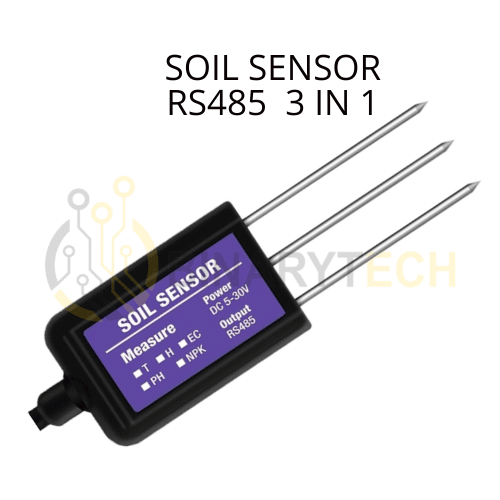
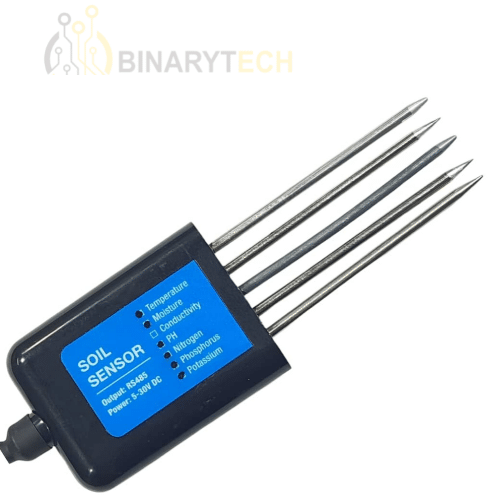
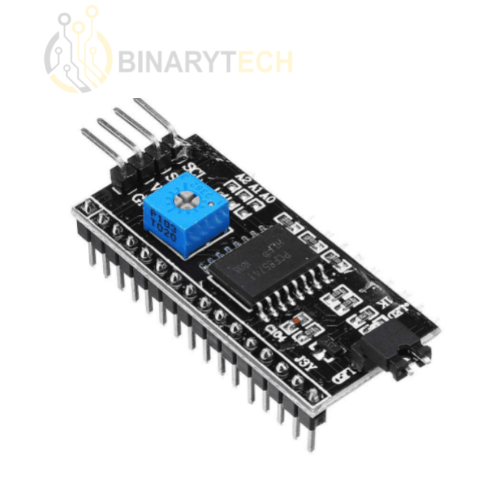
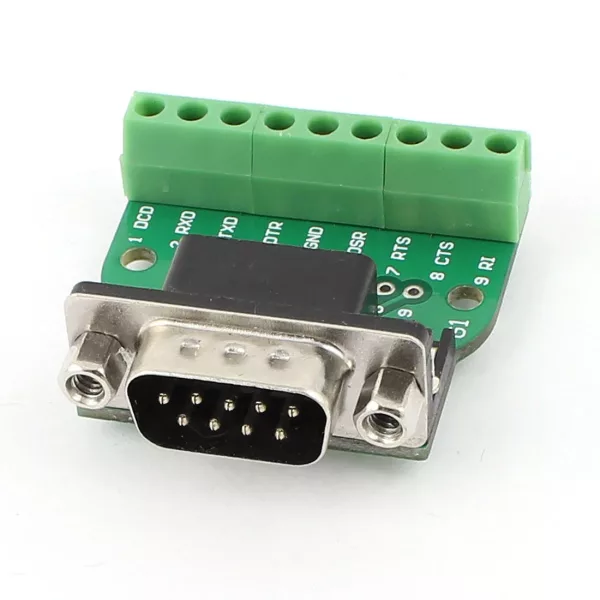
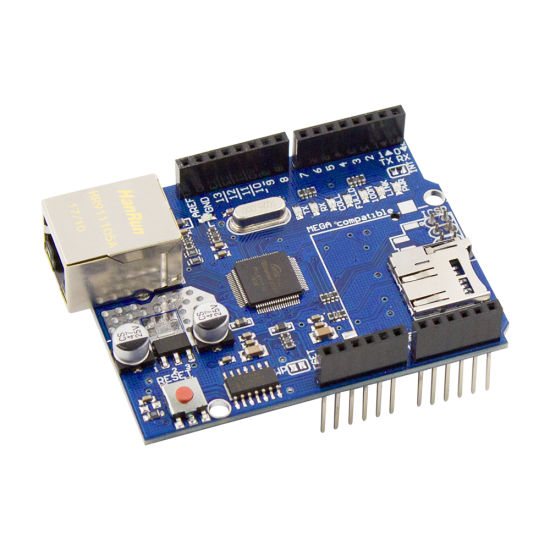
The sensors and interface modules cover common needs: temperature and humidity with the DHT11, soil moisture for watering, TCRT5000 line follower for a robot, EC11 rotary encoder for a menu, DS1307 I2C clock, or a 25V voltage sensor to monitor a battery. For remote links, the MAX485 converts TTL to RS485 over long distances and the ENC28J60 adds an Ethernet port.
The figure refers to the supply voltage of the relay coil, not the switched load. A 5VDC module runs directly on an Arduino board's 5 V, while the 12VDC and 24VDC versions need a dedicated power supply, often in a cabinet or with a PLC.
The High/Low setting lets you choose the logic level that activates the relay, which avoids accidental triggering when the microcontroller starts up. The isolated version electrically separates the control side from the power side, usually through an optocoupler.
The DHT11 suits simple ambient readings with a resolution of around one degree and a slow sampling rate. For fine readings or a wide temperature range, a DHT22-type sensor or an I2C sensor will be better suited.
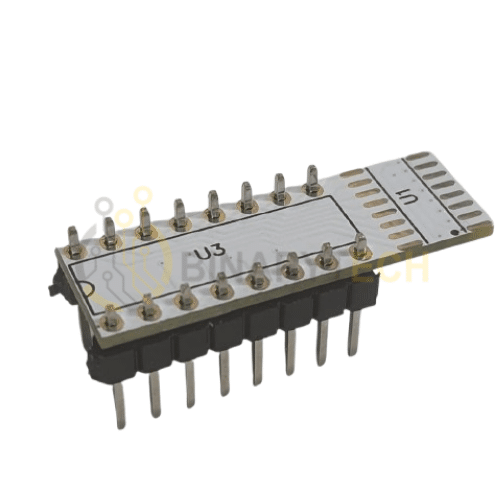
It holds an SMD-package chip without soldering and brings its pins out to the 2.54 mm pitch of a DIP socket. It is the solution for reading, programming or testing an SMD memory chip or microcontroller on a breadboard.
RS485 transmits over a differential pair, which gives it good noise immunity and allows cables several tens of meters long, with several devices on the same bus. A direct TTL link stays limited to a few tens of centimeters.