
DZD 50.00
18 results
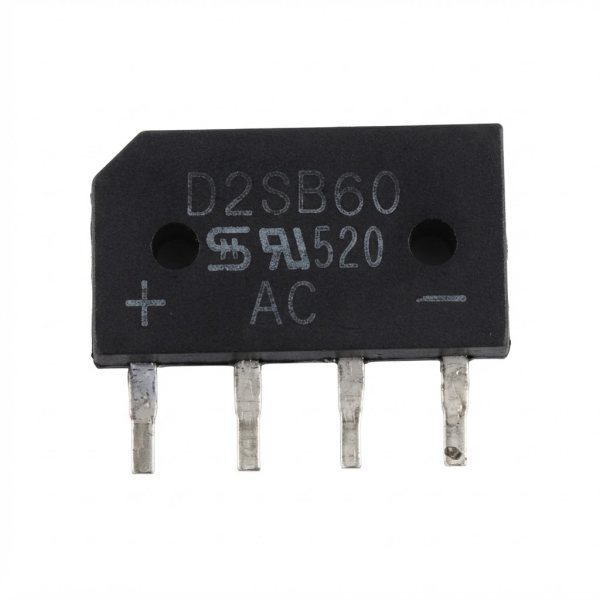
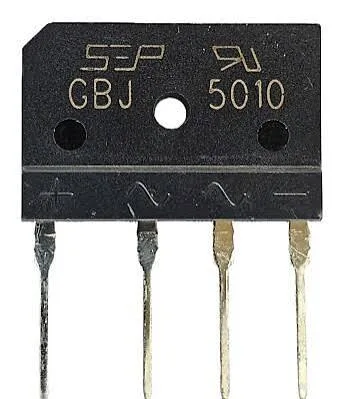
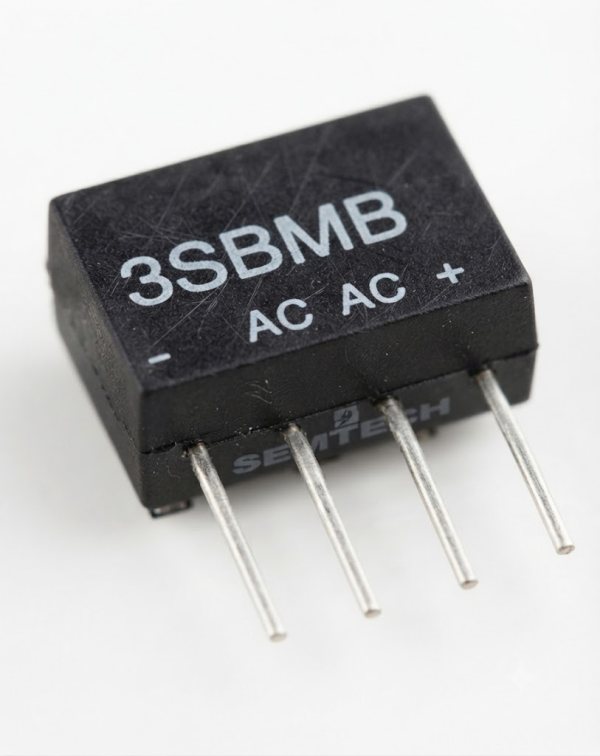
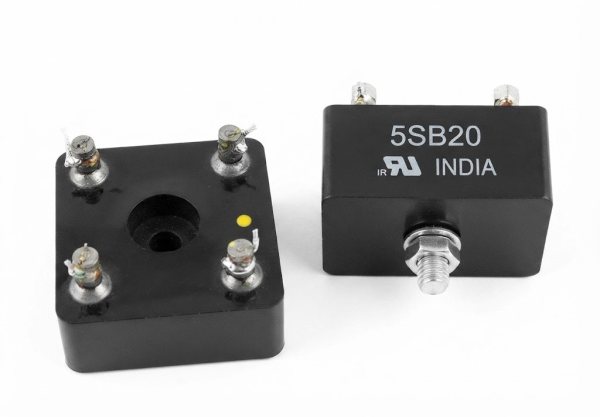
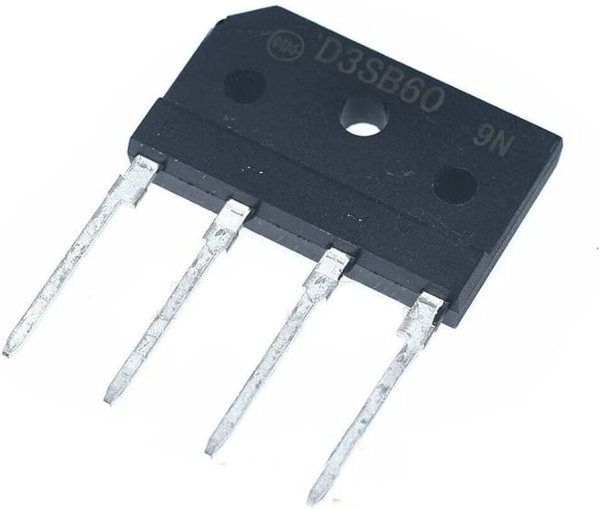
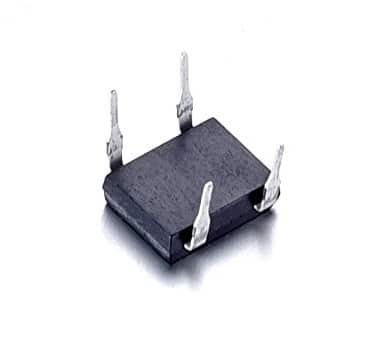
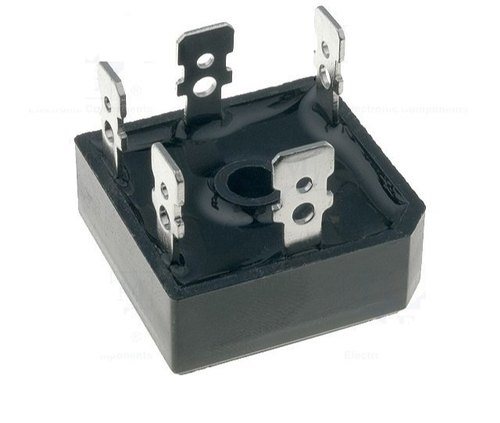
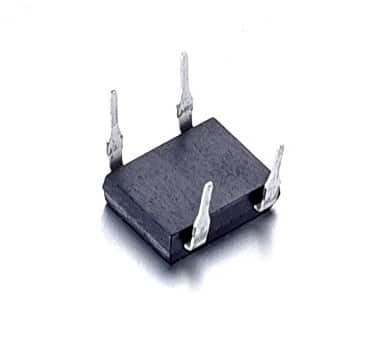
Single-phase and three-phase rectifier diode bridges, in through-hole or SMD package, to convert an AC voltage into DC: power supplies, chargers, drives and power boards.
P2026080608
P2026080470

P2026060064
2BT7N45716
Y8W3223101
PJO1V28370
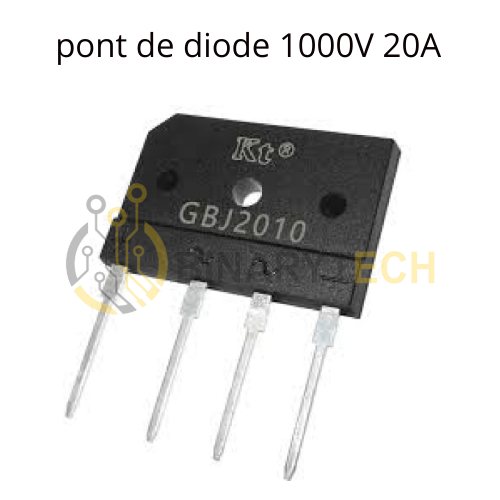
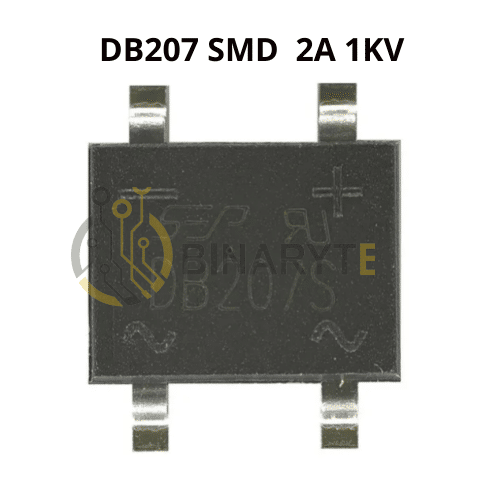
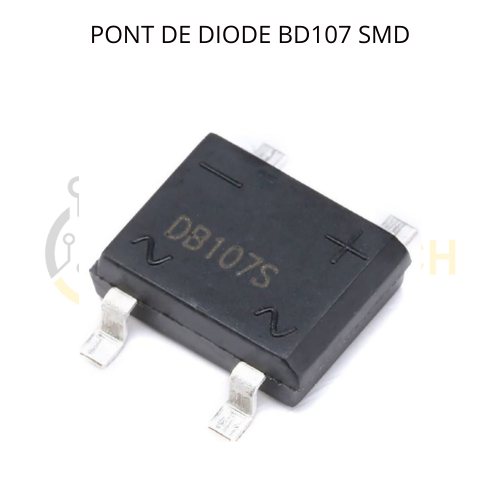
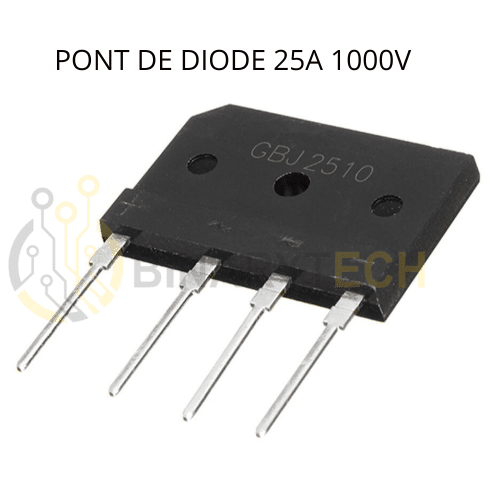
A rectifier bridge groups four diodes (six for a three-phase model) in a single package. Two figures drive the choice: the admissible average current and the maximum reverse voltage. For a circuit on 220 V mains, the peak voltage exceeds 300 V, so you stay on 600 V or 1000 V parts, such as the DB107, GBJ2010 or KBPC5010 series.
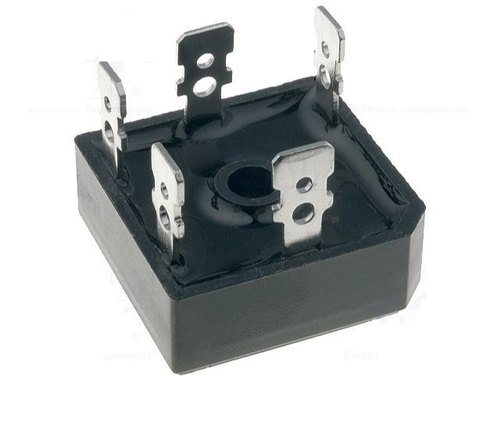
Allow a margin of at least 50% on the current: a bridge heats up because of the roughly 0.7 V drop per diode, which comes to nearly 1.4 V across the whole bridge since two diodes conduct at the same time. Beyond a few amps, cooling becomes mandatory, which is why GBJ and KBPC packages have a drilled metal tab. For discrete rectification or a flyback diode, see the Diodes category.
The single-phase version contains four diodes and rectifies a single AC voltage, such as domestic 220 V. The three-phase version, type SKBPC3510, contains six diodes and rectifies all three phases, which gives a much smoother DC output and less need for filtering.
Choose a reverse voltage of 600 V minimum, and rather 1000 V for margin against mains spikes. The DB107, GBJ2510 or KBPC5010 references cover this case, the choice then being made on your load's current.
The first two digits give the average current in amps and the last two give the reverse voltage in tens of volts: GBJ2510 is 25 A / 1000 V, KBPC5010 is 50 A / 1000 V.
Yes, as soon as the actual current exceeds a few amps, since the diodes' voltage drop is dissipated as heat. GBJ and KBPC packages are designed to be bolted onto a plate or heatsink, while small DB107 parts can do without one at low current.
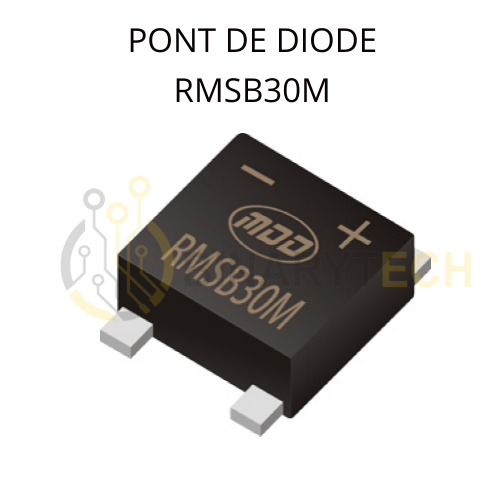
It depends on the admissible current, the reverse voltage, the package type (SMD, through-hole, bolt-on) and the manufacturer. A 1 A bridge for an electronics board and a 50 A module with a metal tab are not in the same range.