
DZD 95.00
25 results
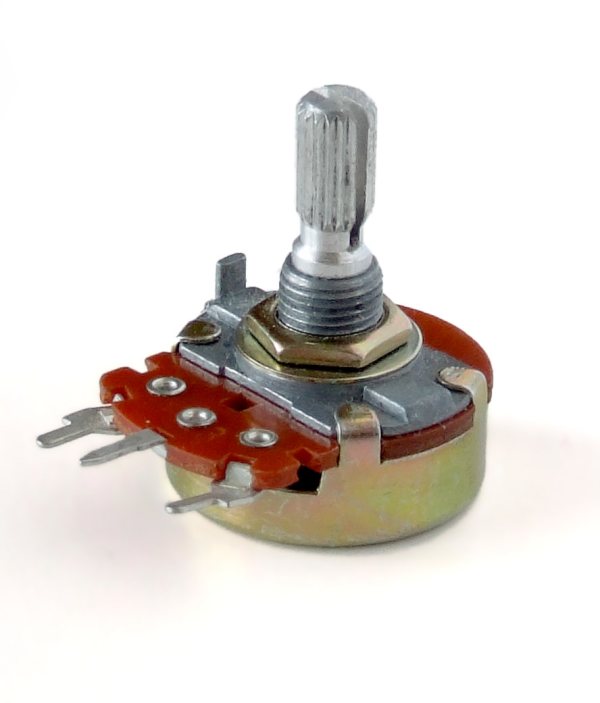
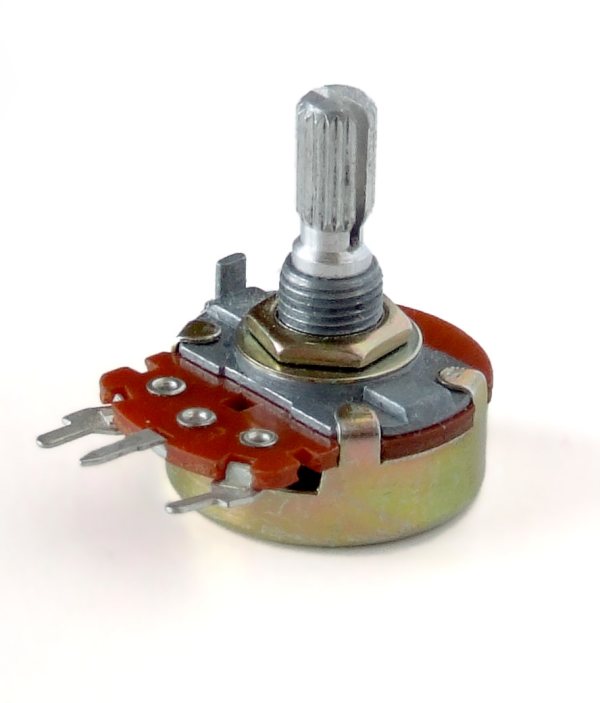
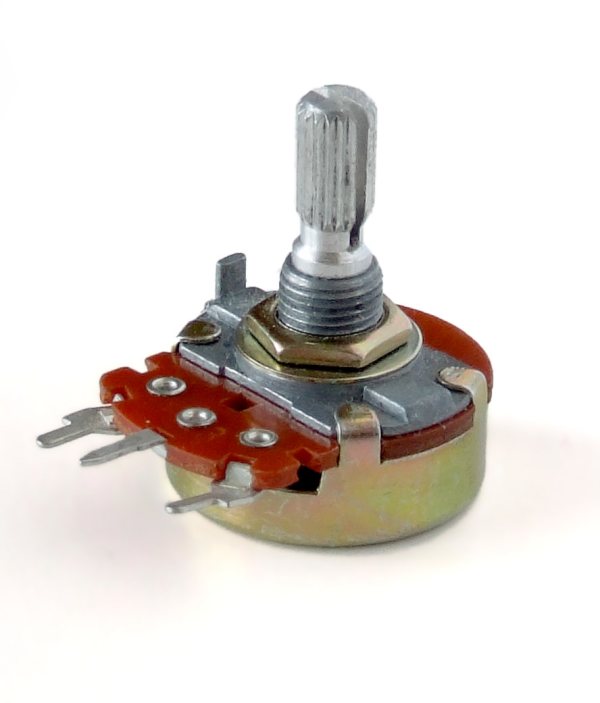
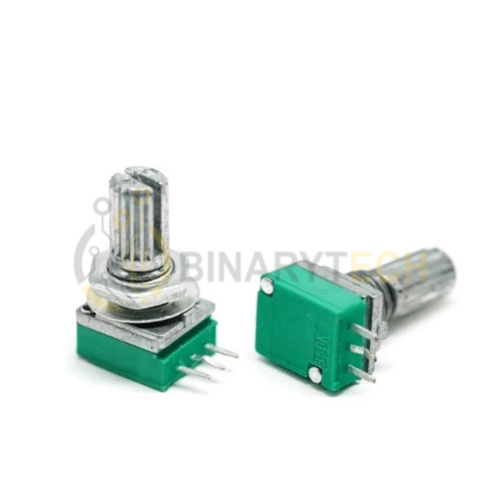
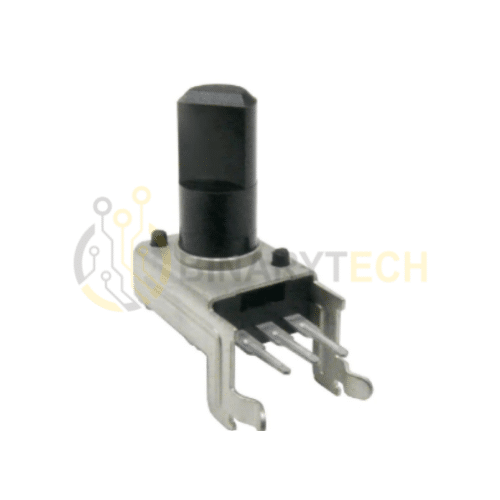
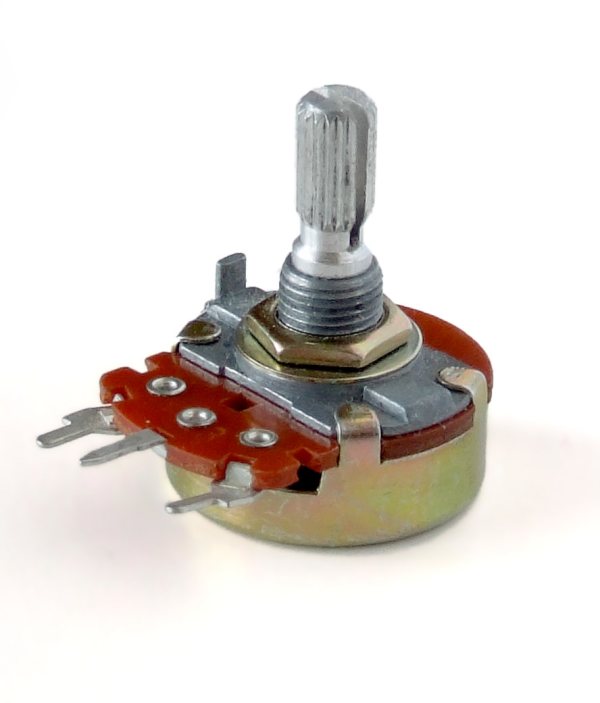
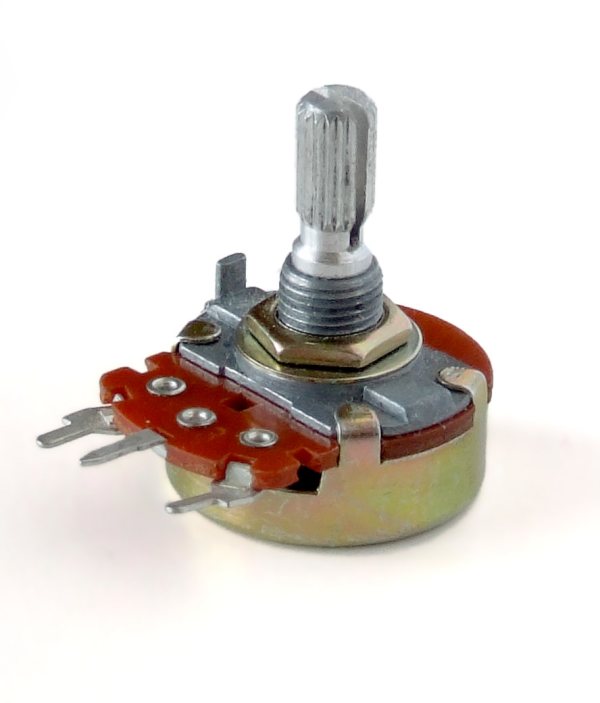
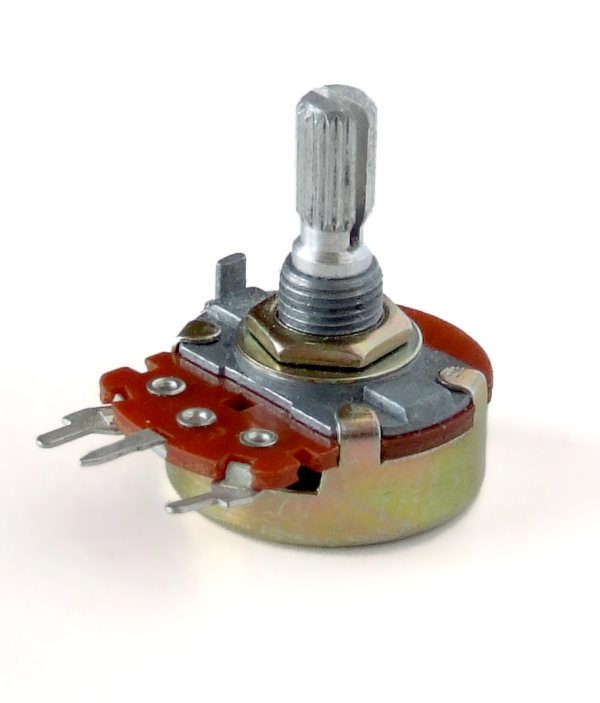
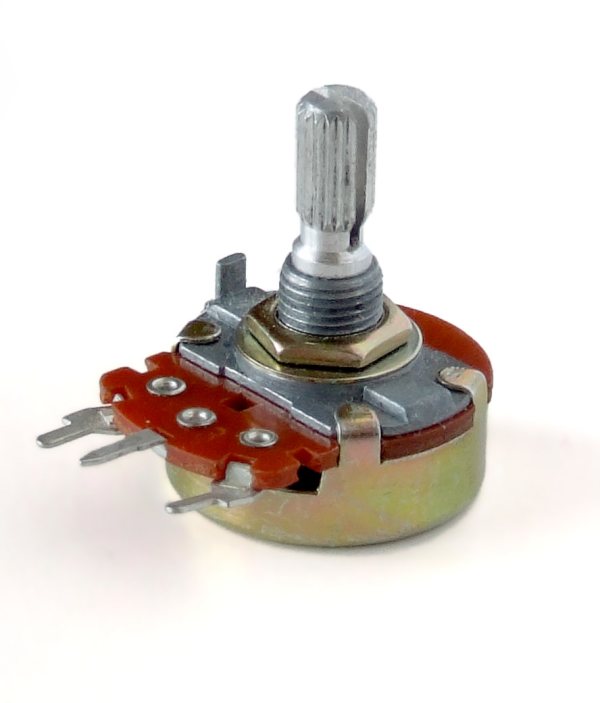
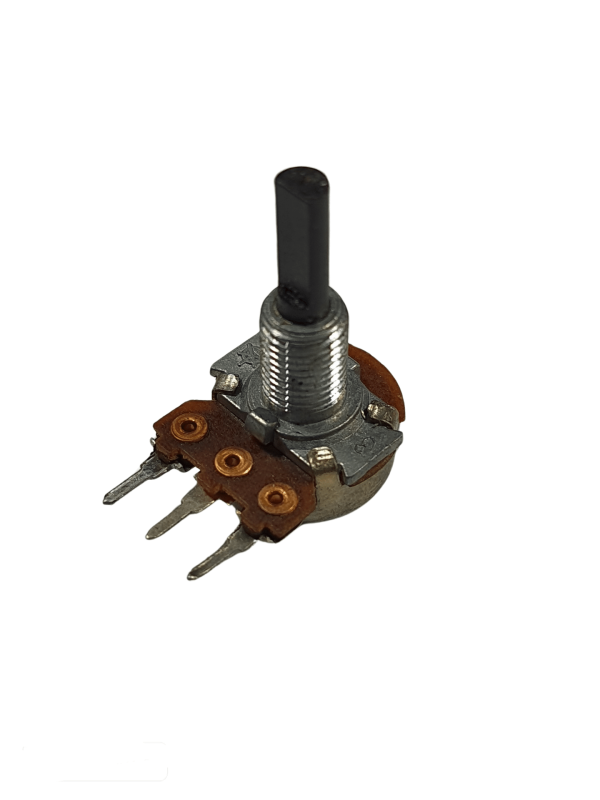
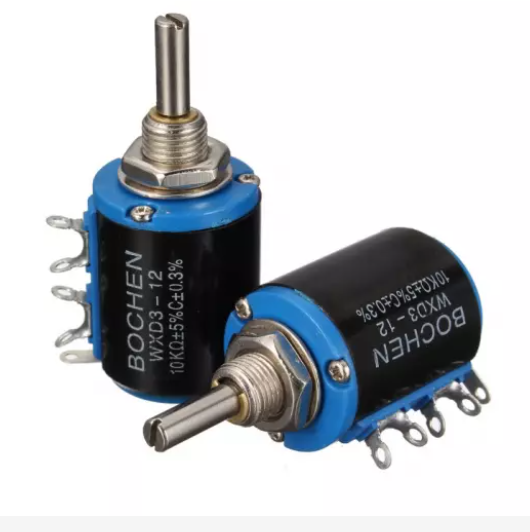
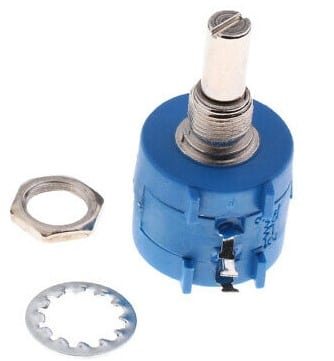
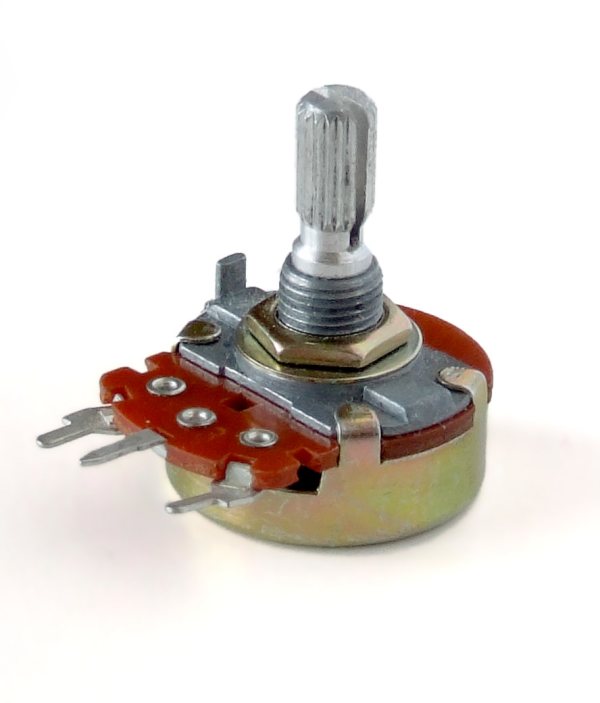
Rotary and precision potentiometers for setting a voltage, a volume or a setpoint: WH148 270°, horizontal models for PCB mounting, wirewound multiturn units and dual potentiometers.
WJ6AT31023-02
4PRVX12798-02
A potentiometer is a variable resistor with three pins: the end terminals receive the signal or supply, and the wiper provides the output voltage. Wired this way, it behaves as an adjustable voltage divider, which is the most common arrangement for a board's analog input or a control setpoint.
Three points determine the right model:
Also check the power rating: a 0.25 W model suits a signal level, while a 2 W wirewound unit can handle more current. Other formats are grouped under Potentiometers.
A linear one (marked B) varies resistance proportionally to rotation, which is what's needed for a setpoint, a measurement or an analog input. A logarithmic one follows the sensitivity of the human ear and is used for audio volume control.
Between 1K and 10K, for example a WH148-1A-2 B10K. A value that is too high (100K and above) makes the ADC reading more sensitive to noise and leakage current.
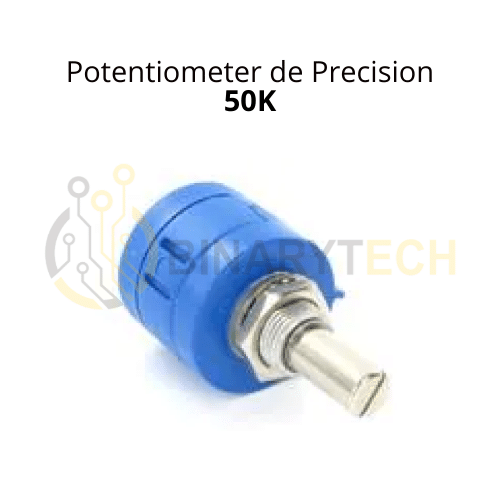
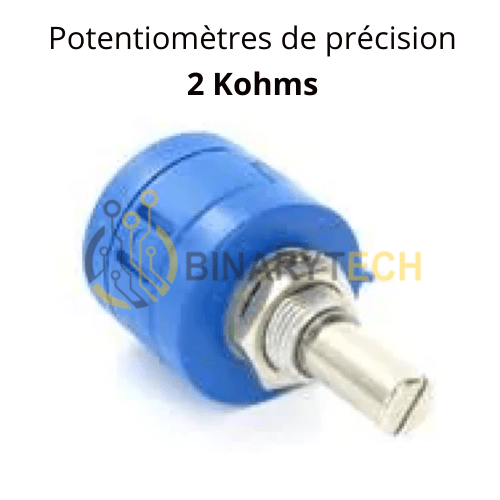
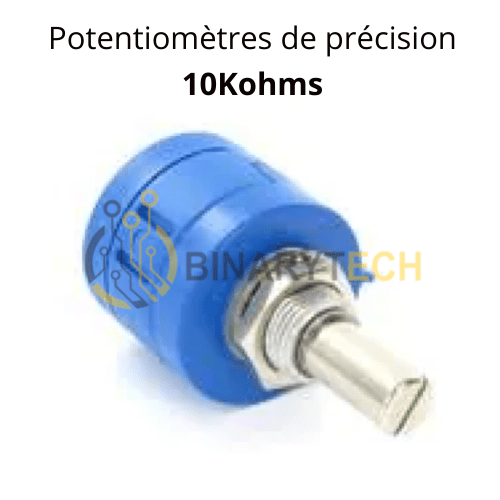
Its 10 turns spread the travel over a much longer range, giving a fine, repeatable adjustment, useful for a threshold, a voltage reference or a calibration. The price depends on tolerance, wirewound technology and brand.
No, not in series: it would dissipate all the power and overheat. It should instead drive the setpoint input of a driver, a PWM module or a controller, which in turn controls the motor.
The two tracks are stacked within the same housing, but each shaft turns independently, allowing two separate adjustments in a single panel location. A model with a common shaft would vary both together.