
P2026080543
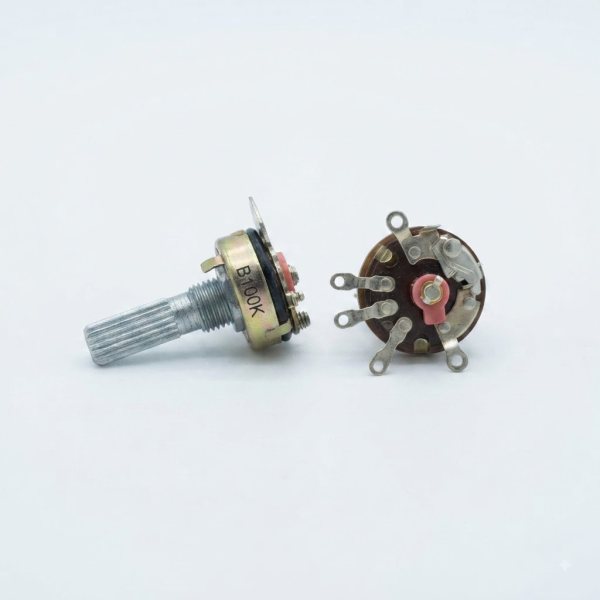
Potentiometer with ON/OFF Switch - 100k
DZD 100.00
78 results
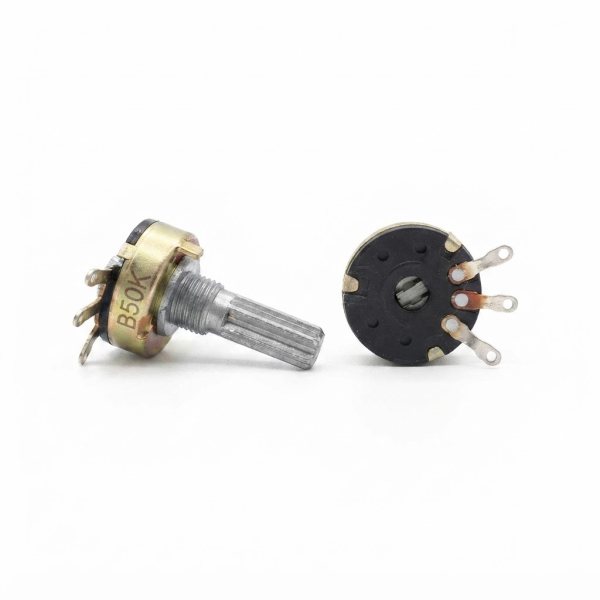
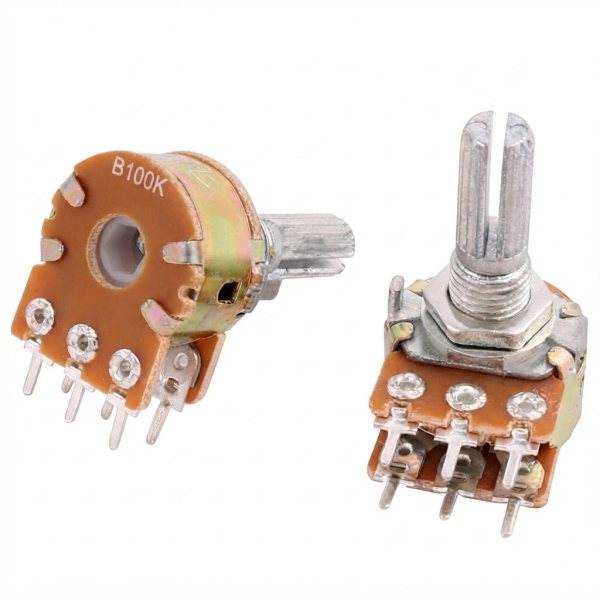
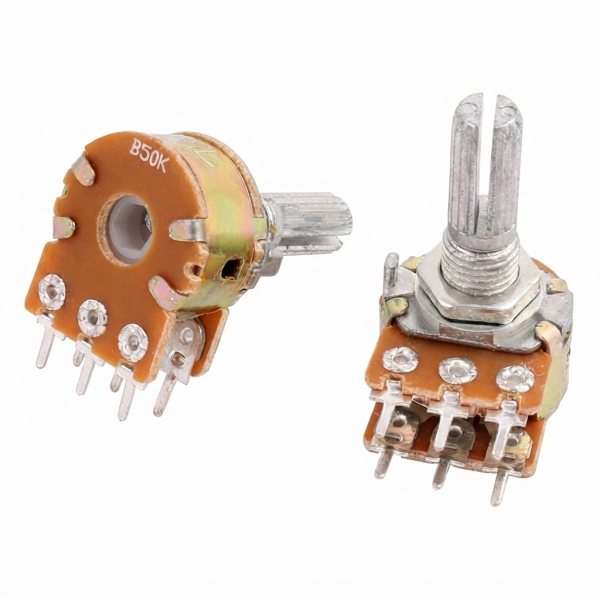
Rotary potentiometers, adjustable trimmers and rheostats from 100 Ω to 500 kΩ, for setting a volume, a threshold, a speed or the output of a power supply.
P2026080543
P2026080542
P2026080540
P2026080539
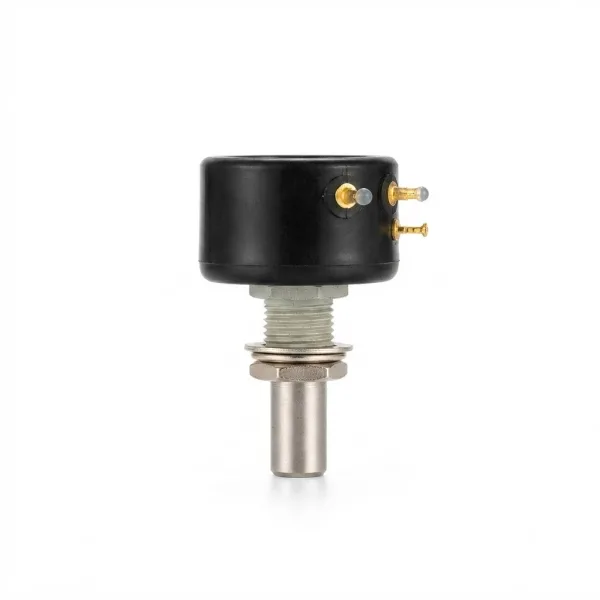
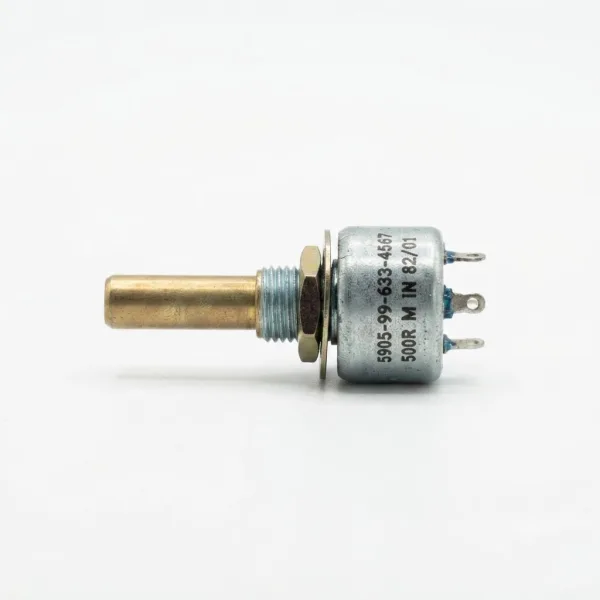
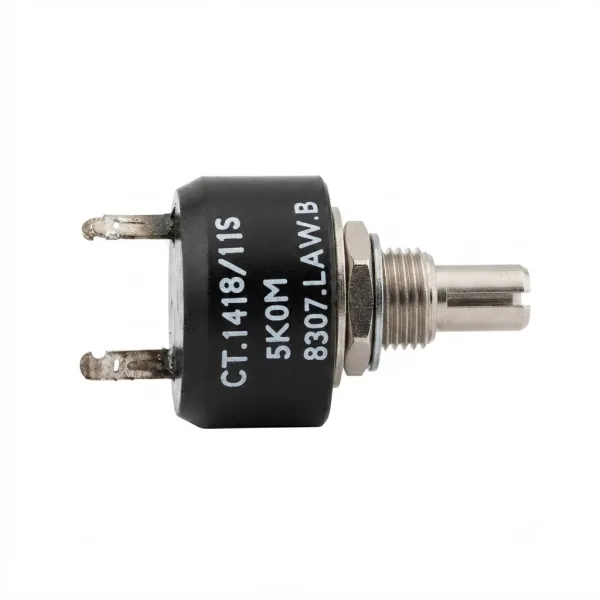

P2026060107

P2026060105

P2026060104

P2026060103
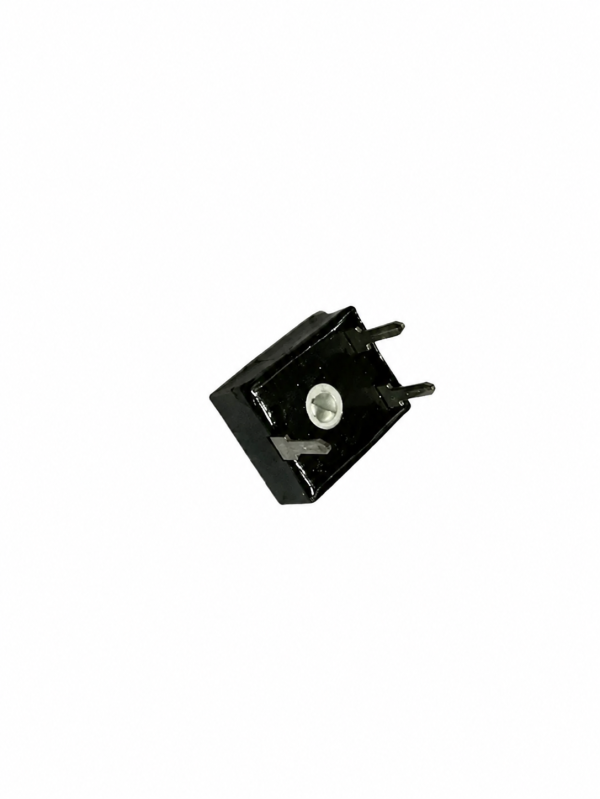
P2026060102


A potentiometer is a variable resistor with three pins: the two outer ones give the total value, the wiper gives an adjustable fraction. Wired this way, it forms a voltage divider; using only two pins, it becomes a simple variable resistor.
Three questions are usually enough: where the adjustment is made, what value, what power.
Also check the taper (B = linear, A = logarithmic for audio), the shaft diameter and the tolerance, often ±10% to ±20% on a trimmer. The rest of the components complete the build.
The potentiometer is used with its three pins as a voltage divider, to deliver an adjustable voltage. The rheostat only uses two pins and is used to limit a current; it is generally wirewound and sized in watts.
The B indicates a linear taper: the resistance varies proportionally to the rotation angle. The A taper is logarithmic and is reserved for volume control, because the ear perceives sound logarithmically.
A value of 10 kΩ is suitable in most cases: low enough for the converter to read a stable voltage, high enough to limit current draw. Above 100 kΩ, the reading becomes sensitive to noise.
The multiturn requires about ten turns of the screw to cover the full range, which makes the adjustment much finer and more stable. It is chosen to calibrate a threshold, an offset or a voltage reference.
The technology (carbon, cermet, wirewound), the precision and tolerance, the power rating, the number of turns and the manufacturer. A standard carbon trimmer and a precision wirewound potentiometer are not in the same range.